
SFUAD writing and photography students have been contributing for several years to the online magazine SantaFe.com in advance of the launch of Jackalope. Stories have included coverage of Japanese Master Shodo Harada Roshi’s visit to Santa Fe, a photo essay of last year’s Snow Poems project, on-the-scene reporting from the annual ARTFeast tour and much, much more. Check out SantaFe.com’s SFUAD publishing page...
SFUAD at SITE
posted by admin
In Spring, 2013, students from the Jackalope pre-cursor class Collaborations toured several exhibits at Site Santa Fe, producing writing and photography that was then published by SITE as a gallery guide. View the guide online here. Photography student Sandra Schonenstein also created an audio visual piece interview with SITE intern Diana Padilla: And photography student Shayla Blatchford also created an audio visual piece with Linda Mary Montano, whose show, “Always Creative,” was part of the SITE...
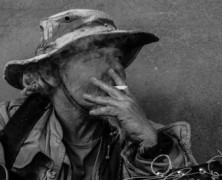
His Name Is Cabin
posted by Christopher Stahelin
By Christopher Stahelin A profile of one of Santa Fe’s street...
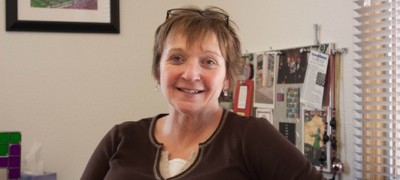
Hanging with Joanie Spain
posted by Brandon Ghigliotty
By Brandon Ghigliotty Last spring, SFUAD Career Services Center Director Joanie Spain sat down with Jackalope to talk about her job in career counseling at SFUAD, and her favorite hobbies....
SFUAD in SFR
posted by admin
During the Spring of 2013, SFUAD writing and photography students worked with and published a variety of articles in The Santa Fe Reporter newspaper as part of the coursework leading up to Jackalope magazine. How to Spy a Turquoise Lie by Charlotte Martinez/ photos by Shayla Blatchford Skies the Limit by Brandon Ghigliotty/ photos by Michelle Rutt Silly Rabbit by Nick Beckman/ photos by Amanda Tyler An Alternative Space by Mark Feigenbutz/ photos by Tim Kassiotis The Personal Touch by Arianna Sullivan/ photos by Luke Montavon Trash Talkin’ by Natalie Abel The Bright Outdoors by Clara Hittel/ photos by...
John Willis: Storyteller...
posted by Amanda Tyler
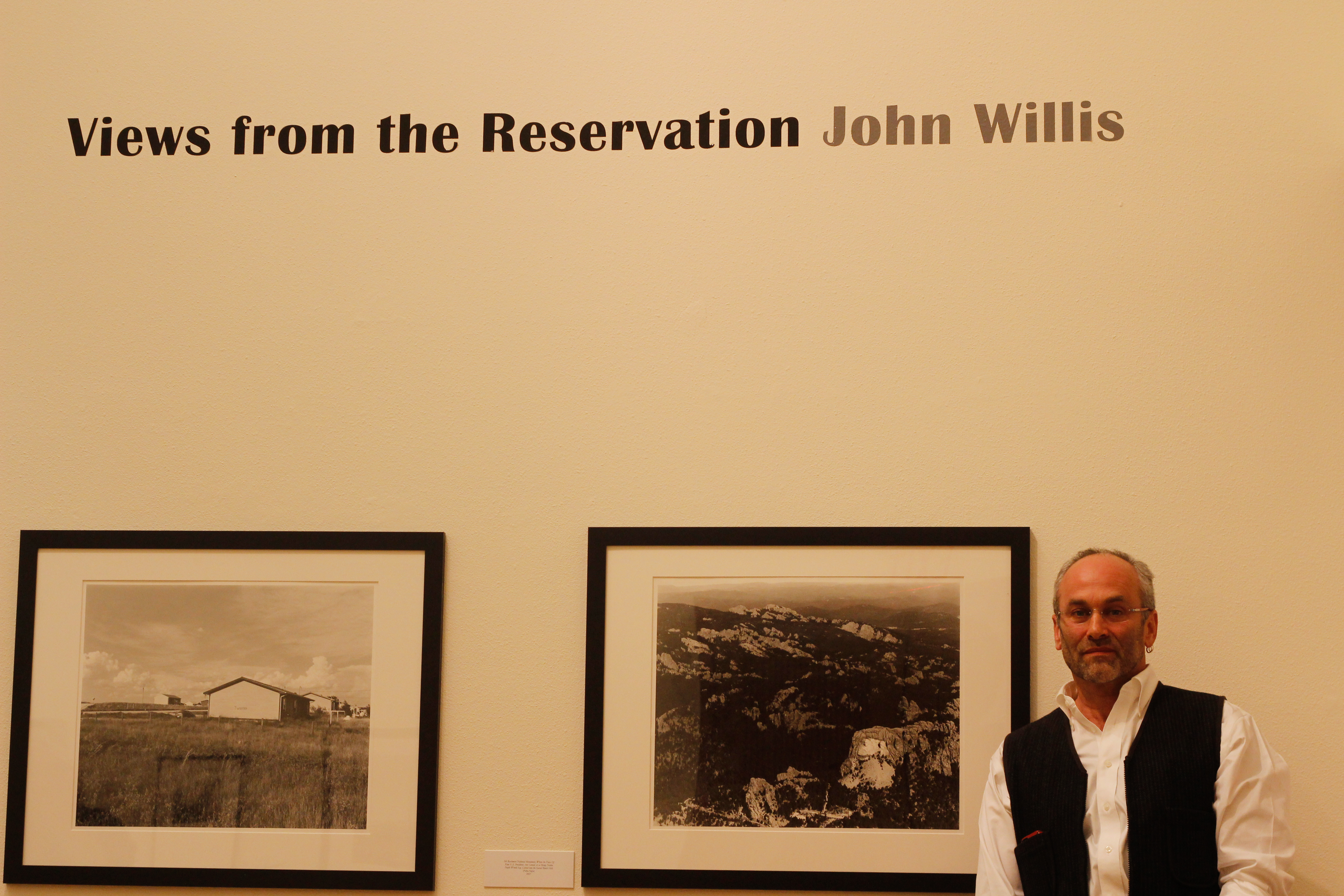
John Willis does not consider himself a photojournalist, or even strictly a documentary photographer. Willis, who teaches photography at Marlboro College in Vermont, has collections of work that would be hard not to coin as documentarian, but he sees a distinct differences between the types of storytelling that photographers can do. “There are a lot of ways to experience and to explore storytelling,” he explains, “and for me, it is always connected to something I’m experiencing—I choose my topics out of a need to work through my own stuff emotionally.” At the same time, Willis is acutely aware of the responsibility that comes with storytelling—perhaps even more so than many journalists. While he takes his pictures “to understand how I feel about things in my life,” Willis believes that, “if you are taking pictures of somebody, telling stories about somebody, you are an outsider, because it is not you that the story is about.” As an outsider telling somebody else’s story—or taking a photograph of somebody else—you have a responsibility, Willis believes, to that subject. You are responsible for telling their story to the best of your ability, honestly and respectfully, so that ultimately you will help others develop an empathic understanding of that subject. For Willis, this extends even further than just sharing his own photographs. For Willis, the difference between a journalist and a documentarian boils down to time. A documentarian affords themselves more time with their subject, something a journalist being paid by the story may not be able to do. “I have the luxury of making my images because they’re what I’m drawn to,” Willis explains, “because I make my living as a teacher.” When Willis sells an image, he thinks of it more as “extra-credit” than another step along...
Art and Community
posted by Arianna Sullivan
Nicholas Chiarella, a Santa Fe based artist and contributing faculty member at the Santa Fe University of Art and Design, moved into his loft apartment on Santa Fe’s west side in November of last year. Within five weeks, Chiarella was hosting “Sit Wherever You’d Like,” a house-show of the sort that seems to be at the heart of Santa Fe’s community of young and emerging artists.
Outside with Zach
posted by Clara Hittel
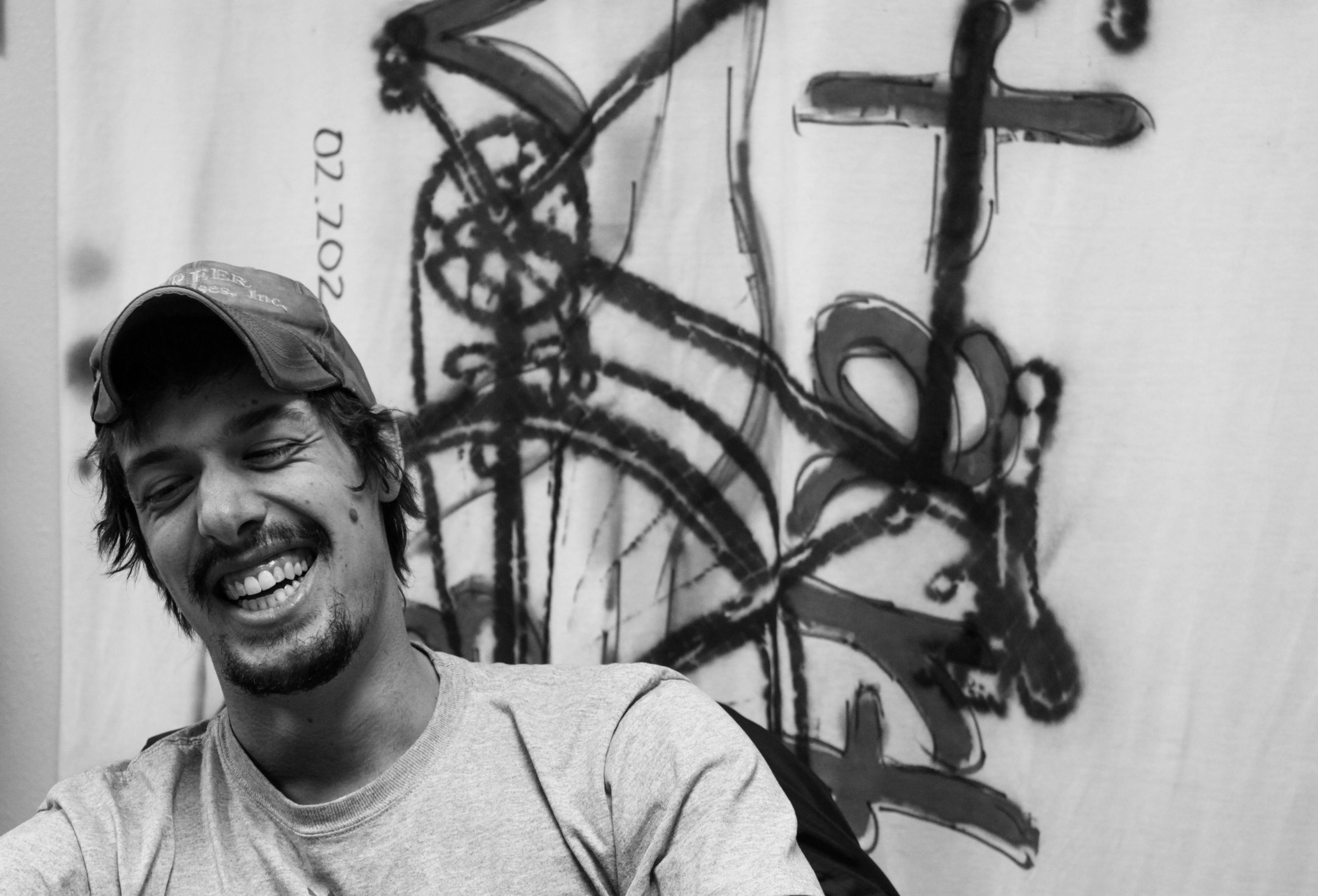
If any SFUAD students are itching to hit the slopes this winter, Zach Greer is the man to see. Director of the Outdoor Recreation Program at the Driscoll Fitness Center since the spring semester of 2012 and a graduate of the College of Santa Fe himself, Greer truly loves the activities he takes students out to do. A lot.
Form, Function, Design...
posted by Charlotte Martinez
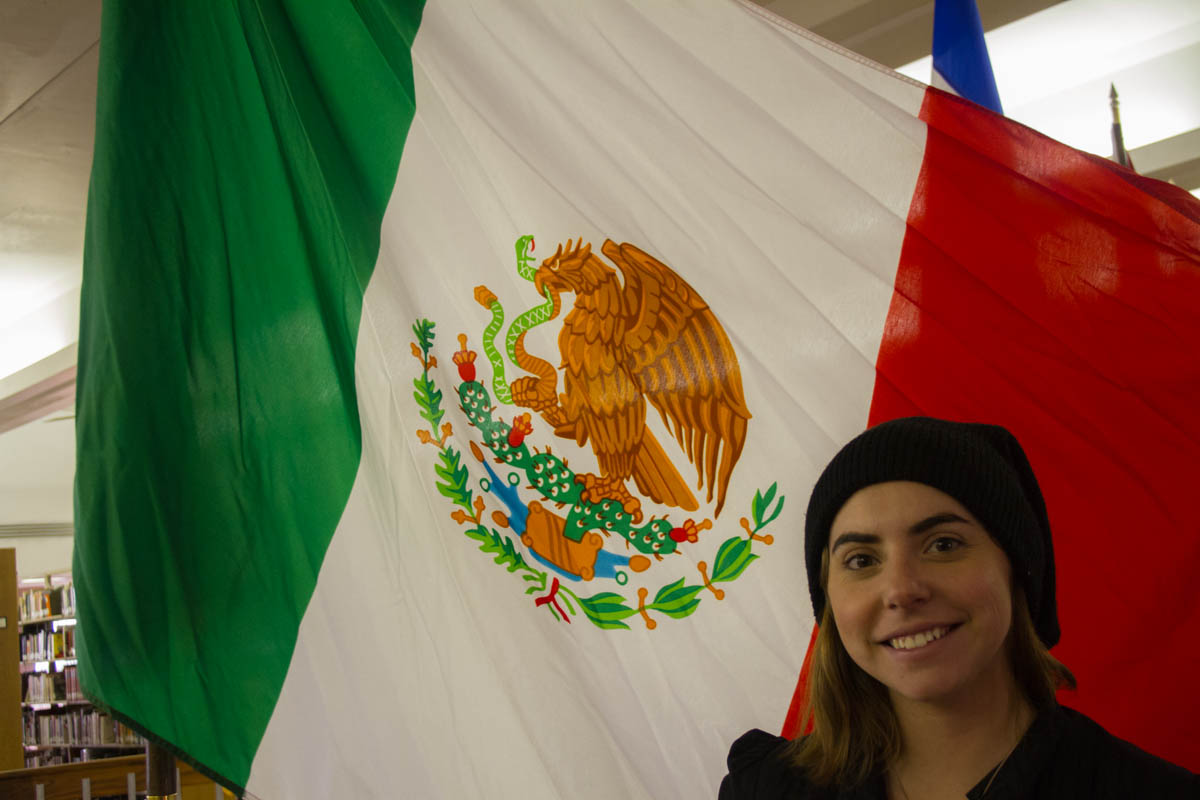
By Charlotte Martinez/ Photos by Michelle Rutt Rebecca Alvarez, transfer from Mexico and senior at the Santa Fe University of Art and Design admits she sees things most people don’t. It’s not dead people. What she sees is very much in plain sight, yet overlooked in modern society. Alvarez sees it because she works with it, she slaves over it and has dedicated her college education to it. Some call it visual communication, others call it the art of persuasion. Alvarez says “more than anything [it’s an] aspect of functionality.” The secret is summed up in two words: graphic design. “Design could be related in any sphere like the government, politics,” Alvarez begins. The designer, for example, that created Helvetica, a typeface used especially on subways in New York, describes the influence of checkboxes on electoral ballots. Alvarez says “design could change how you as a voter go and vote.” “You have to kind of live with the idea,” Alvarez says, “that more often than not people won’t recognize that something is…” she looks up as if to form a thought. Because English is her second language, Alvarez’ thoughts move faster than her speech. She adjusts her black beanie and begins again. “Design is taken for granted. Sometimes you don’t even realize this is well done. You either like it or don’t like it. Does it function or doesn’t function?” Functionality is one reason Alvarez decided to transfer to SFUAD. Born in Austin Texas but raised in Queretaro Mexico, Alvarez says her decision to return to the States was due to the University’s vilification of graphic design as an art form. “In Mexico,” she says, graphic design “is not as appreciated. It’s not well paid and the culture [suggests] that it’s not needed.” She...
High Mayhem
posted by Shayla Blatchford
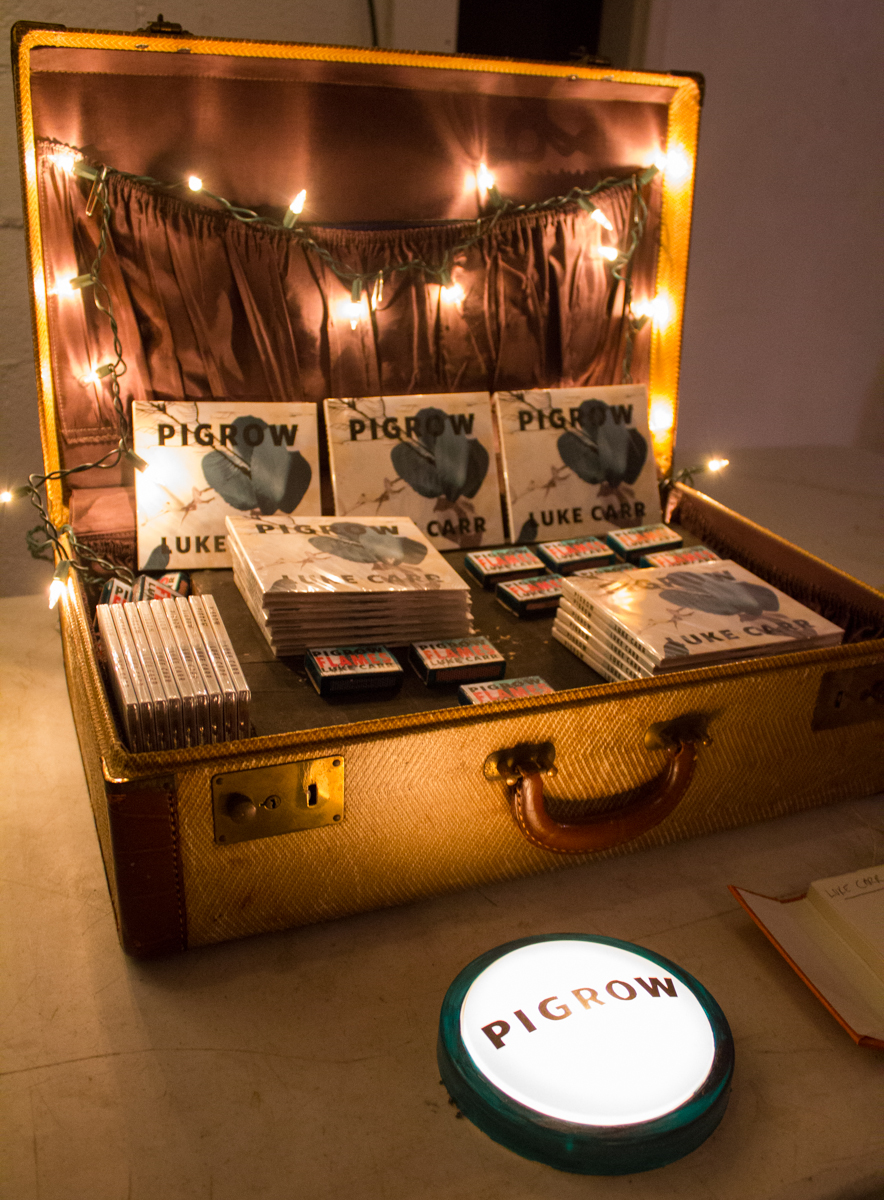
By Shayla Blatchford Last weekend, High Mayhem Emerging Arts hosted duo CD releases with local artists iNK oN pAPER and soloist Luke Carr. Located just south of Santa Fe’s downtown area, High Mayhem is an arts studio tucked away in an industrial dead end off of Siler Road. The volunteer staff accepted a suggested donation of $10 at the door, which included a digital download of each band’s newly released album. Luke Carr opened the show with his battery charged guitar, which became the first of many instruments to be looped as part of his full band. In between sets, the audience drifted out of the venue and into the fenced-in “front yard” with a bonfire as its centerpiece. As iNK oN pAPER closed the evening, the looping continued with Carlos Santistevan on bass and manipulated drum beats by Milton Villarrubia III. In comparison to Carr’s building layers of looped instruments, which become the foundation of his track to top with vocals, iNK oN pAPER created a technical depth to their process of loops and samples that are only intended to be ripped to shreds in their experimental electronic battle of drum and...
Night of Illumination
posted by Luke Montavon
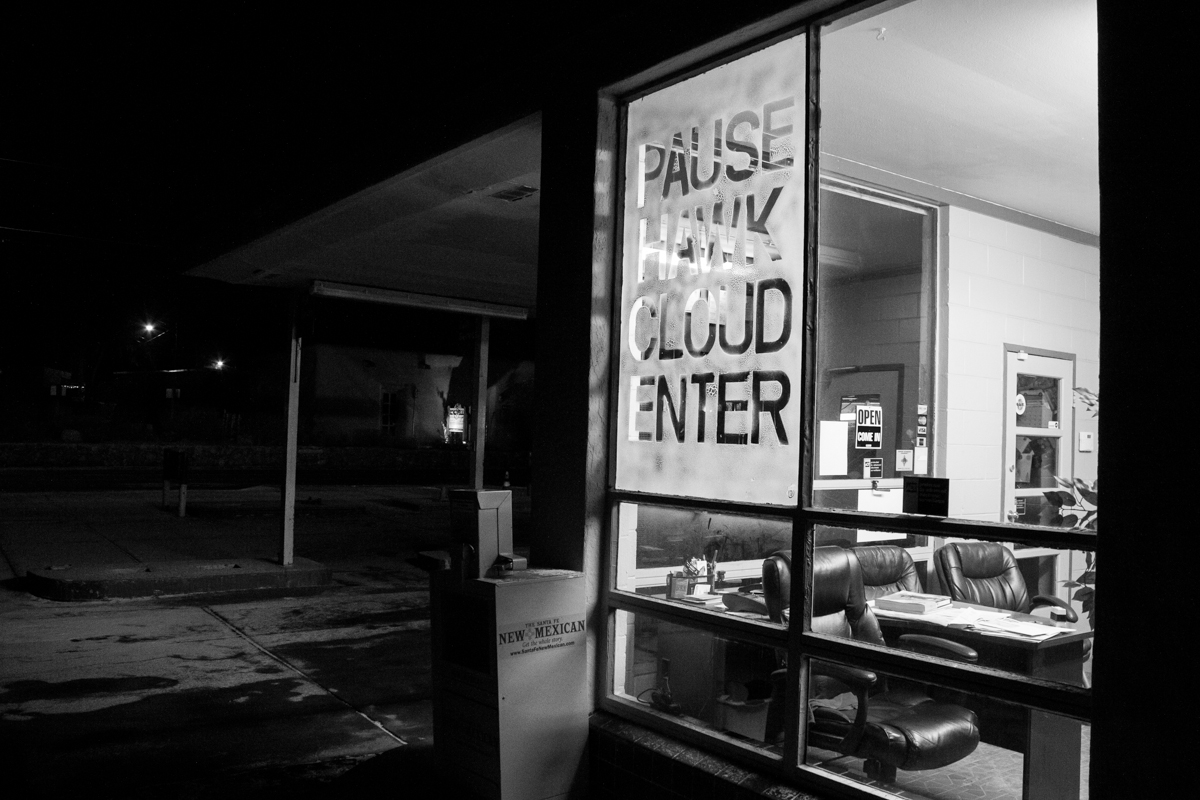
By Luke Montavon Night of Illumination was the Feb. 22 culminating event for The Snow Poems project, featuring locally created poetry in public space. A complete map is...
NMSA Theater
posted by Amanda Tyler
It is opening night, the house is open, and the set is not even finished. The director is exasperated. His stage manager informs him that the set was not finished because they “ran out of money.” “You finally get used to one way of doing things and they up and change all of the rules on you,” he exclaims. His writer, who is pacing the stage with loud nervous high-heeled clicks, turns on him. “There are no rules in art!” she shrieks, sounding half-insulted and half-horrified. The two are interrupted by their stage manager, who is trying to delicately remove them from the stage so that their play can commence. “There shouldn’t be,” she says, “but those days are past.” She shoos them off stage, the house lights dim, and the play within the play Gun Shy is finally allowed to begin. Gun Shy is a comedy written and directed by Joey Chavez, and performed by high school theater students at the Santa Fe charter school New Mexico School for the Arts. The play breaks the third wall and brings up questions about what constitutes art, and what is or isn’t allowable in art, over and over again. The answers to these questions, however, are perhaps more apparent in the people behind the play than the script itself. Before their performance, the cast paced, stretched, and applied last minute make-up or costume touch-ups while practicing a few last line-throughs—reciting their lines in order without blocking or acting through the entire play. Their director and teacher Joey Chavez entered the room intermittently and watched them intently, without interrupting the focus coursing through his students. Cris Lannucci, an NMSA senior who plays the author of the play within the play, is eager to sit for an interview,...
Night of Written Zen with Shodo Harada Roshi...
posted by Charlotte Martinez
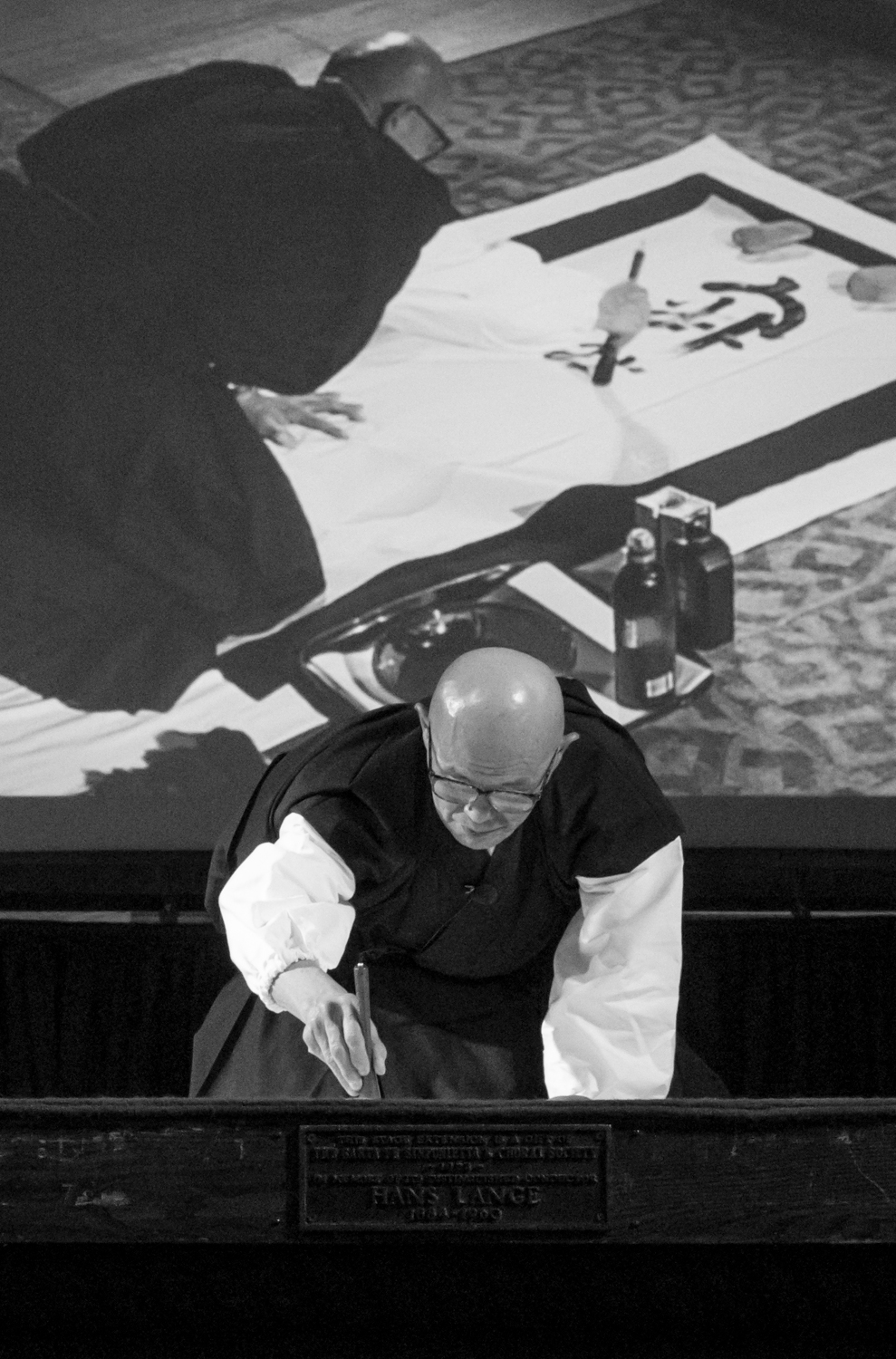
By Charlotte Martinez/Photos by Natalie Abel From the wall paintings on St. Francis’s auditorium in downtown Santa Fe, an image of the catholic saint gazes with pastel eyes at the scene forming in the front of his pews. Three robed members of the Tahoma One Drop Zen Monastery from Whidbey Island are seated on the stage, peering indifferently at the audience as they file in. A fourth member stands, monitoring a pile of blank canvases and a bowl of black ink on the stage floor. Positioned in front of these tools is at camera that projects the image on a large screen. This, no doubt, is for the convenience of those audience members who just hate when they can’t see. Japanese Master Shodo Harada Roshi stands on Francis’s stage with his hands clasped against his long black robe. He, like the others, looks serene and statuesque in what I can only label as a zen zone, but looking at the wise wrinkles and slick head I can’t help but calculate the master’s age. If he was born in 1940, his face is that of a 73-year-old, but even this doesn’t seem right. His face is too shaped and his posture too perfect; could this be a side effect of a disciplined life? If I feel like shaking his hand to obtain wisdom, is that too “western” of me? His interpreter and facilitator, Daichi-Priscilla Storandt, sits next him with a kind-looking grin which contrasts the Roshi’s stoic one. If balance is essential in Buddhism, then the coupling is just short of perfect. Books on the Roshi’s calligraphy works are for sale in front and I wonder if St. Francis objects to this display. The Roshi perhaps feels this too, and despite his title, practice...
Mesa Recordings: Big Things in Store for Santa Fe...
posted by Christopher Stahelin
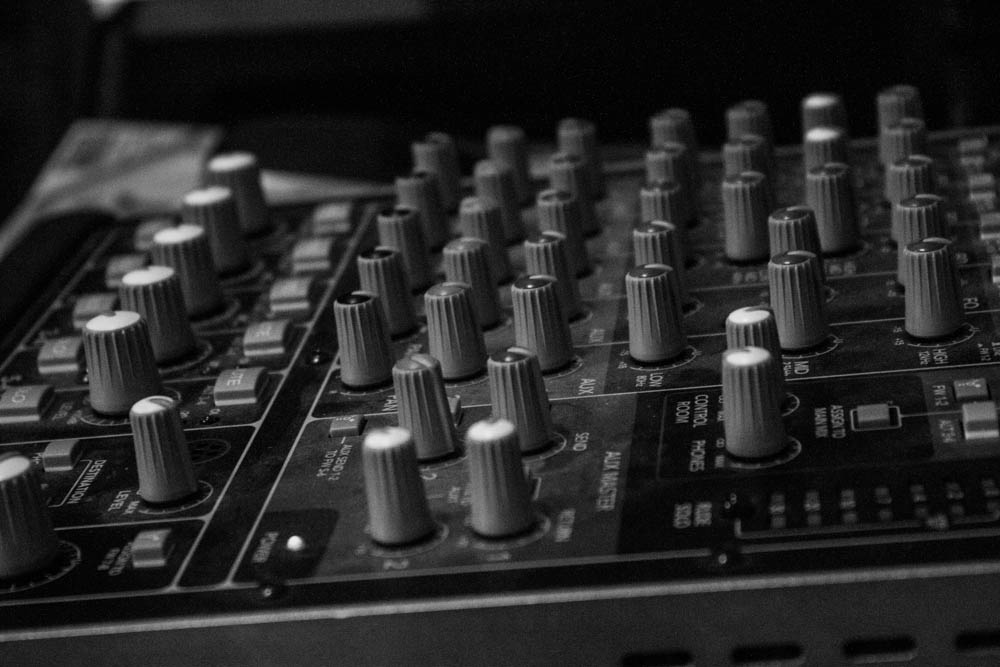
By Clara Hittel/Photos by Christopher Stahelin I am provided with hot tea and guided outside to the shed, amidst small patches of snow still clinging to the high-altitude chill. Within the odd structure that sits apart from Paul Groetzinger’s idyllic mountain home is the studio of Mesa Recordings. Groetzinger apologizes for the mess, while I decide that a variety of instruments scattered around the floor and dangling ominously from shelves overhead is exactly how a recording studio should look. He sits at his desk and I settle in by the space heater. Paul Groetzinger is a member of two well-known Santa Fe bands—D Numbers and Detroit Lightning—as well as a DJ and solo artist known as Feathericci. He is also now one of the founders of Mesa Recordings. I met the astoundingly friendly Groetzinger when I went to see Detroit Lightning play at the Cowgirl last week. It didn’t take me long to realize that this was the same Grateful Dead cover band I had the pleasure of stumbling upon at Totemoff’s—the bar on the slopes of the Santa Fe Ski Basin—a few weeks ago. Beats on the Basin is a regular winter occurrence, it turns out, presented by Hutton Broadcasting and benefiting the Adaptive Ski Program. Groetzinger and fellow Connecticut-born band mate Ben Wright, who have been playing music together since they were 14 years old and are both members of D Numbers and Detroit Lightning, run sound for every Beats on the Basin show. They are very busy men indeed. “I really like having a diverse musical life,” Groetzinger shares. “It makes me feel complete to do a bunch of different things. We’d sunk into the D numbers thing really heavily for many, many years and it’s nice that we’re all at...
A MIX to Remember
posted by Brandon Ghigliotty
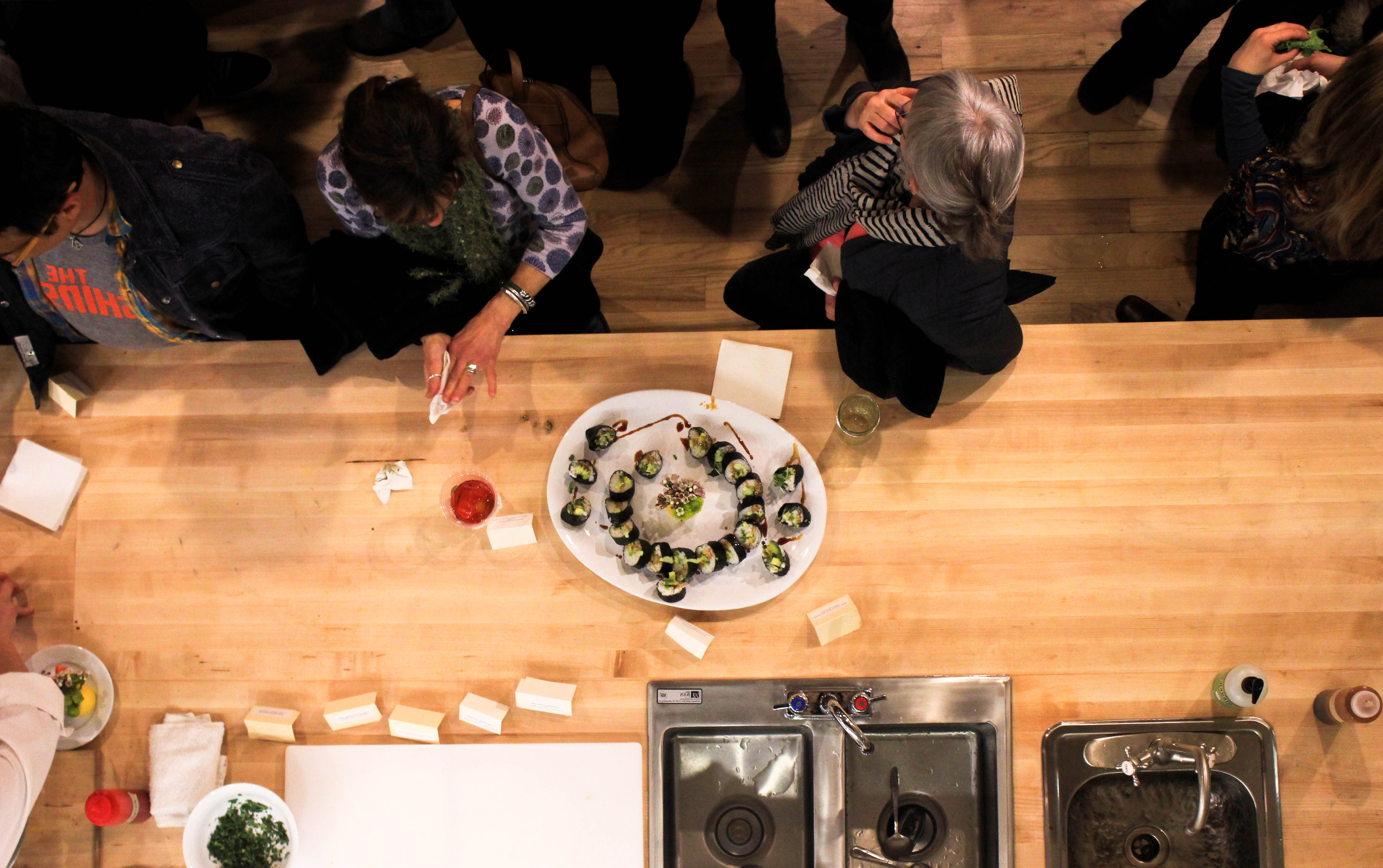
By Brandon Ghigliotty/ Photos by Sandra Schoenenstein Taking place on the third Thursday of every month, February’s MIX Santa Fe was held at the Santa Fe Culinary Academy. The upper-level space consisted of winding rooms opening into a large demonstration kitchen. Several platters of food were exhaustively replenished during the event by Executive Chef Rocky Durham and his crew. “People love the Azerbaijani flatbread,” said Durham. It was delicious. Chewy, herbed bread with a sharp tinge of cheese. It was easy to see why the platter emptied so quickly. Other platters held shrimp spring rolls, pork-filled lettuce wraps and vegetarian nori rolls. Blue Corn Cafe & Brewery manned the cash bar, initially serving beer in glass jars, then abandoning them for the more traditional plastic cup. People met up, introduced each other to new acquaintances, and generally broke the MIX drought brought on by MIX’s absence in the months of December and January. Speaking with Kate Noble, MIX coordinator and special projects administrator with the Economic Development Division for the City of Santa Fe, the past 31/2 years of MIX have had their ups and down. Yet, even during the low points, “We were still hearing about people making connections or getting work and being able to stay in Santa Fe,” Noble said. Entrepreneurs took the opportunity to hand out flyers on their projects, Dawn Hoffman of Only Green Design gave information on “Upcycle Santa Fe”: a festival to come up with creative solutions to the ecological issues that face the community. Another entity on site was the graphic design collective known as “Hexagono”, a group of Santa Fe University of Art and Design students, seeking donations to their project “The Importance Of,” which is “A 200 page hard-bound book exploring Graphic Design as Contemplative Art.” One...
 Jackalope Magazine is the student magazine of Santa Fe University of Art and Design. Building on the interdisciplinary nature of our education, we aim to showcase the talent of our university and character of our city.