
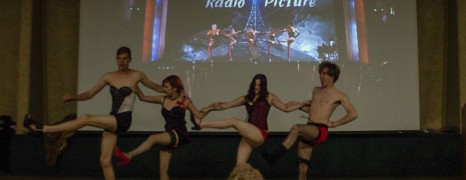
The Rocky Horror Picture Show has been a cult classic since the 1970s. Often shown in time for Halloween, the British musical comedy is most frequently played in the theater while a shadow cast pantomimes in front of the screen. SFUAD has a much shorter history with the show, with only one year of this production under its belt. Peter Crowder, a sophomore in the film department, was at the head of the show last year and decided to take the reigns again for this fall. “I wanted to make it happen, so I asked the school and they said yes,” stated the outspoken Australia native. With support from the manager of The Screen, and permission from the nightly film clubs, Crowder has nearly single-handedly pulled together this Halloween weekend event. Last year’s cast included a total of 13 students and resulted in one midnight showing. This year, Crowder began with a more serious intention. He held auditions several weeks ahead of time, requiring students to dance, as well as giving them an option to sing during their time. A third of the final cast are returners, though few are revisiting their old parts. For this weekend’s show, expect a group of 19, scantily clad in various corsets and fishnet tights. These students, from varying departments and with all levels of experience, have managed to come together and embrace their inner actor. After weeks of rehearsals, and memorization of the entire movie by this diverse group of students, the three performances will be surely be memorable. The Rocky Horror Picture Show will be presented at The Screen 11 pm Oct. 25, midnight on Oct. 26, and again at 10 pm Oct....

A New Set of Eyes
posted by Arianna Sullivan
Imagine watching video footage of Olympic athletes training, dance rehearsals, skateboarding tricks—all from a first-person point of view. Google Glass teases the possibility of seeing the world through somebody else’s eyes. Last February, Google opened up a competition for the distribution of its new ‘glasses’ called Google Glass Explorer. In order to enter, contestants—who had to be US citizens over 18 and capable of throwing down $1,500 for a Google Glass—entered by tweeting at Google ‘#ifihadglass’ followed by a 50-word or less proposal. Google chose 8,000 winning tweets and began distributing Google Glass prototypes this spring and summer to the new “Glass Explorers.” As Google Glass became a tangible reality, the question of how the new technology would affect journalism became unavoidable. Was this going to be the next new technology to shake the journalism world? Tim Pool, a multimedia journalist who became well known for his live streamed footage of the 2011 Occupy Wall Street protests in New York City, received his Google Glass just days before heading to Turkey to cover the protests there last summer. What was most exciting to Pool about using Glass to film instead of other devices was obvious: Glass is hands free. Glass relies on Bluetooth or an Android to connect to the Internet, so Pool had to find ways to keep his streaming live (he often carries multiple SIMs so he can switch operators when necessary), but that did not detract from his excitement that he could film hands-free. In a Guardian article from July, Pool explains that, “when there’s a wall of police firing plastic bullets at you, and you’re running through a wall of tear-gas, having your hands free to cover your face, while saying ‘OK Glass, record a video’, makes that recording process...
Basquing in Art
posted by Christopher Stahelin
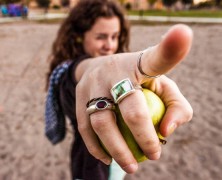
SFUAD Film major Sara Esparsa talks about the differences between Victoria, Spain and Santa Fe, New Mexico, along with some of her favorite aspects of Santa Fe. In the end she says, “Santa Fe is a great opportunity to be yourself and to create...
Coming Attractions
posted by Charlotte Martinez
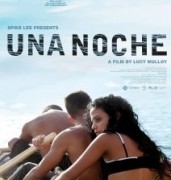
The Screen Presents: Oct. 25-31 Una Noche, Would You Choose Family or Freedom? Winner of Tribeca Film Festival’s 2012 Best Director Award, Lucy Mulloy’s Cuban drama tells a daring tale of a young Havana criminal trying to escape to Miami. Beth Accomando of PBS.org says, “Molly captures the Cuban spirit of energy, resiliency, resourcefulness, and passion. She does an impressive job of blending an intimate story of friends with a meticulously observed portrait of Havana.” Muscle Shoals, Most Talked About Documentary Is Still Playing! The true story of the small town with a big sound credits Tennessee’s spiritual “Singing River” as the birthplace of America’s most celebrated music. From the FAME Studios of Rick Hall, blacks and whites worked together in the heat of Alabama’s racial hostility to create what is called the “Muscle Shoals sound.” To attest to Shoals reputation are artists Gregg Allman, Bono, Clarence Carter, Mick Jagger, Etta James, Alicia Keys, Keith Richards, and Percy Sledge. In a documentary “propelled by gorgeous music and rich anecdotes,” David Gritten of The Telegraph calls the story “joyous, uplifting and as funky as the music at its heart.” Turandot (Royal Opera), Performance at the Screen Straight from London’s Royal Opera House, Director Andrei Serban brings forth the enchanting voices of Lise Lindstrom and Alasdair Elliott. The story? Princess Turandot has sworn that no man shall marry her unless he can correctly answer three riddles. Prince Calaf, captivated by Turandot’s beauty, takes up the challenge, determined to win her heart or die in the attempt. With a rich sound accompanying this dark and erotic fairy tale, the show guarantees an adventure in a beautiful but savage world. Playing at 11 am, Sun. Oct. 27. Tickets on sale here. Visit thescreensf.com for movie times....
Q/A W Cristina Kahlo
posted by Arianna Sullivan
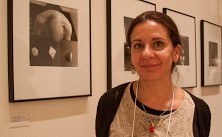
Cristina Kahlo, great-granddaughter of Guillermo Kahlo and great-niece of Frida Kahlo, is a practicing photographer and member of Maestro Julio Galindo’s Platinum Print Workshop in Mexico City. She visited Santa Fe this October to attend the Alternative Photographic International Symposium sponsored by Bostick and Sullivan, Inc. and chatted with The Jackalope Magazine about her relationship to photography. Kahlo’s photographs will be on exhibit at the Santa Fe University of Art and Design’s Marion Center Gallery with four other photographers until Nov. 8. The following interview has been edited for brevity. Jackalope Magazine: When did you discover photography? Cristina Kahlo: My father was an amateur photographer—he was always playing with cameras. The darkroom was a place for adults. Children were not allowed. There was a special lock on the door so that children could not get in. So when I was 10 or 11 years old and my father invited me in, it was like I was being allowed into a forbidden room. He enlarged a picture of a family picnic and showed me how to submerge the photo paper in the chemicals, and that moment of seeing the image appear on the paper was magic. That is when I discovered what it means to make a photograph, and the moment when I fell in love with photography. JM: How did you pursue that newfound love? CK: My father died young. He was 42, and I was 13. But after he died, his darkroom was still in the house. A brother of a friend of mine did photography, and he said, ‘you like photography, don’t you,’ and he showed me the ABCs. That’s how I started printing. Then when I was 16 years old, I started at the Escuela Activa de Photographia, the only school...
The Importance of Ernest Withers
posted by Nicholas Beckman
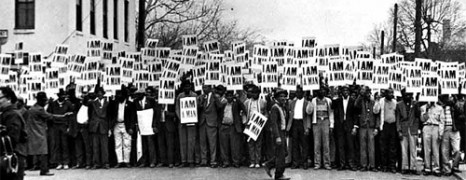
There’s more than just framing and composition that goes into making a photograph powerful. A picture can be aesthetically displeasing, but if the content evokes a feeling from the viewer, whatever that feeling is, it is worthwhile. The current exhibition of Ernest C. Withers’ photographs at Monroe Gallery of Photography follows a bevy of key players in the Civil Rights Movement and, while they are all composed with beauty and care and displayed in a rather minimalistic manner, it also is the story and the people themselves that make the photographs interesting. Withers did not necessarily consider himself an artist. Bigotry and intolerance can be a great motivation to become, as he referred to himself, a “news photographer.” While Martin Luther King Jr., and Malcolm X motivated the African American community to find their voice in the United States, Withers documented them, showing the world their heroes. He captured their character and strength, as well as their humanity, all with the snap of a camera. Born in Memphis, Tenn., Withers’ upbringing was probably very similar to the very people he would go onto document during the peak of the Civil Rights Movement. Trained at the Army School of Photography during WWII, Withers then went on to serves as one of Memphis’s first African American police officers before his career in photography. White walls and black frames bring focus to the work on display at the Monroe gallery. Colorless photographs of an oppressed people do more to the viewer who has even the most basic understanding of the segregation and hatred our own country enforced than a handful of words on a page could ever do. That is why these photos are arranged in the way that they are. An ample amount of space between each picture gives viewers enough time to be intrigued by a stoic photograph of Martin Luther King Jr. and then immediately disgusted by photos of racist persecution, without being overwhelmed. These bare, white walls that consume the black frames allow the pictures inside of these frames to break free and run wild inside the viewer’s mind. “I AM A MAN” reads the signs held by dozens of sanitation workers rallying for solidarity. The viewer is swarmed with text that begs our modern society to ask, “Why should anyone have to defend their existence?” “Don’t buy gas where you can’t use the Rest-Room,” says the bumper sticker on a vehicle that is most-certainly not owned by a black family, who is content with their community’s current views on cohabitation. Withers also documents the musical scene in Memphis, with pictures of James Brown, Aretha Franklin, Al Green and even Elvis— all grounded with the feeling of “we’re changing the world.” The Monroe Gallery is located at 112 Don Gaspar Ave. Ernest Wither’s work will be on display until Nov. 24,...
Night Glow
posted by Charlotte Martinez
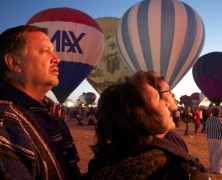
“Join us for a weekend of fun in Santa Fe,” the email read, but it wasn’t as corny as it sounds. If anything, Family Weekend at SFUAD—student showcases, awesome food, and a trip to Albuquerque—was just a front. The truth? Parents wanted to see their kids and the kids (admit it!) wanted to see their parents. I was still reluctant when my mom asked if we could do Family Weekend. I’m a senior, I thought, it’ll just be freshman families. Or I’m from Santa Fe, I’m not far enough to miss them. But it wasn’t just parents of freshmen who attended this weekend and as soon as I saw my mom, dad and brother Friday night, I couldn’t wait for the events to start. My mother, Jeanette, had attended the College of Santa Fe for a year while pursuing a degree in landscape design. When she read the email about Family Weekend, she turned to my dad, Edward, and said, “would you like to see your daughter?” He was in. My brother, Jesse, graduated last year from New Mexico Tech and is now a full time employee of the Los Alamos labs. He wanted to see his sister. He didn’t care what we did. Art, in general, is not discussed much in my family, but after checking in on Friday and drinking some wine (or sparkling water in my mom’s case) and eating some cheese in the library, I sent them into the Garson Theater to watch Middletown. Afterwards, they had the following to say: Mom: “You’re born, you die, it’s about everything in between.” Jesse: “It’s the little things in life.” Dad: “It was different.” Saturday began with a good lunch and it ran into some student showcases, including a visit to the...
Coming Attractions
posted by Charlotte Martinez
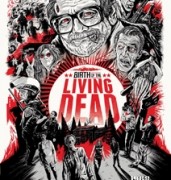
The Screen Presents: Oct. 18-24 Birth of the Living Dead, Vietnam and Zombies! Ever wonder where the billion dollar zombie industry came from? In 1968, college dropout George A. Romero shocked a society, already infected by the Vietnam war, by creating a film in which the dead arose to eat the living. In his low budget film, Night of the Living Dead, Romero horrified his audience with gruesome action and detailed makeup. This documentary explores how one brave move of cinema redefined counterculture and commented on the realities of war. Rebecca Alvin of the Provincetown Magazine calls it a “brilliant deconstruction of [a] classic groundbreaking movie.” Opens Friday. Opening Weekend Screening Includes Double-feature with Night of the Living Dead Shepard and Dark, the Untold Story of Sam Shepard’s Closest Friendship In the early 1960s, Sam Shepard, Pulitzer Prize winner and Academy Award-nominated actor (The Right Stuff), meets Johnny Dark, a homebody who becomes Shepard’s friend and pen pal. Despite dramatic differences in their lives, Shepard and Dark remain friends, even living together when Dark marries an older woman whose daughter would become Shepard’s first wife. In 2010, Director Treva Wurmfeld begins filming the friends after they agree to publish their many years worth of correspondence. Treva’s documentary captures the bond of two unlikely men sifting through history, acknowledging all the good and bad memories. David Fear of Time Out New York calls the film, “an ode to a long-lost era of bohemia, an insightful look into male psychology and pathology, a valentine to the art of letter writing and an illustration of how the past is never dead, because it’s not even past.” Opens Friday. Featuring Introduction and Q/A with Director Treva Wurmfeld Fri. Oct. 18, 7 p.m. Tickets on sale now. Live: Spartacus...

Freedom Hopkins: A Renaissance Man
posted by Nick Martinez
“If you had to label me,” began senior Freedom Hopkins, “and labeled me a filmmaker, you would be denying me everything else.” Hopkins has done his best to defy labels. Growing up just an hour south of Santa Fe in Albuquerque, New Mexico, Hopkins has always had interests in various forms of art. He performed in school productions and crafted his first film entitled “Freeing Joshua” his senior year of high school. Arriving in Fall 2010, Hopkins was initially a film major. A year and a half later he converted to a double major in film and theater. A semester later he stood alone as SFUAD’s only self-design major. “There are too many forms of communication for me to commit to one. Which maybe has been my problem throughout life.” Dana Levin, creative writing co-chair and Hopkin’s advisor, hardly sees a problem. “Freedom’s been great: self-directed, committed to his self-designed curriculum, asking for what he needs bureaucratically and intellectually,” said Levin. “I love how open he is to input from everything! Art, people, world. And he teaches me too, through sharing his enthusiasms for independent cinema, the connections he sees between the history of twentieth century film and literature and how those two mediums have responded to shared cultural zeitgeist.” It’s these connections that Hopkins hopes to imbue in all of his work. He doesn’t necessarily see any medium as mutually exclusive. The Creative Writing department offered the opportunity to understand story, both its history and its contruction. At The Film School Hopkins gains the understanding of the collaborative process. The Performing Arts department lets Hopkins experience the “sense of entertainment, of performance, of kinetic live energy, which is what I want to bring to my movies.” However, Hopkins’ wide area of interests presents its own form of challenges. “Which department do [self-design majors] call home?” asked Levin. “In terms of wading through school bureaucracy, it’s important for a student to have a departmental home. Freedom seemed departmentally homeless to me, a visitor to Film, Theater and Creative Writing, but no foothold in any of those departments in the way a traditional major would have.” The bureaucracy doesn’t seem to concern Hopkins in the slightest. He dismisses the fact that he doesn’t know what will be on his diploma with a simple hand wave. It’s the work that matters. “The self design has a reputation as the cop-out major,” said Hopkins. But this stereotype is hardly accurate. Without much institutional support it is up to the student to get the most out of their college experience. As Hopkins put it “you are your own success or failure.” With his first semester of his senior year halfway done, Hopkins has his eye towards the future. Despite his love for New Mexico, he hopes to attend graduate school in New York where he can continue his particular brand of entertainment. But what does that ultimately mean? “I’m interested in the human experience, why we communicate the way we do, how we do it and its significance,” said Hopkins. “Now that’s pretty vague, but so is art.” ...
Be Bold
posted by Arianna Sullivan
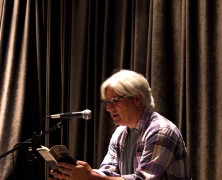
LA Times book critic David Ulin is loathe to give advice. Or so he said, during a Q&A during his visit to the Santa Fe University of Art and Design last week. However, the entirety of Ulin’s visit to SFUAD was an inadvertent how-to course for writers. First and foremost, says Ulin, “Writing is a practice, not a religion!” Ulin learned this by pursuing a job that challenges his writing skills daily. Ulin’s job and his personal writing are a part of the same world: Writing criticism is a “writerly practice,” and he works each day to craft reviews that are “also satisfying reading experiences.” That said, writing on a deadline, another aspect of Ulin’s job, “removes the preciousness” from the work. With a new story due every day, it is imperative for a writer to be able to crank words out and let them go as soon as the final draft goes to the editor. This is coming from a man who worked on a novel for nearly thirty years before he scrapped it, though he could have worked on it until he was eighty. “It’s important to remember that all writers are a part of a conversation,” says Ulin, “and if nobody ever sees your work, you’re not really taking part.” Which leads to another recommendation: Get your work out there. Ulin is a private writer. He never reads works in progress at public readings. Yet that is exactly what he did in O’Shaughnessy last week. “I keep sharing this piece at readings,” he said, “as if to light a fire under my ass to finish it.” Having a fire under the ass is important for getting work done, and one way to help keep it lit is to say “yes” to...
The Murk of Memory
posted by Brandon Ghigliotty
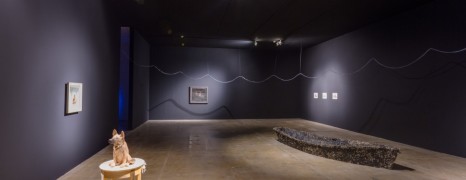
Enrique Martinez Celaya transformed nearly 12,000 feet of gallery space into an autobiographical journey at SITE Santa Fe. “The Pearl” spoke of loneliness, longing and and a troubled relationship to the landscape. Both through absence and explicitness, the work conjured the turmoil of memory. Pushing past the entryway of the installation, the gallery-goer confronts the image of a German Shepherd eating a house-shaped block of meat. Hideous baby laughter bleats out intermittently as the canine devours its meal from the plate. The image was projected on thick canvas blinds that concealed the next part of the journey. Once the canvas curtains hosting The Guardian are navigated, a small window appears on the left, giving a glimpse of the future experience ahead. The space opened up to 24 Casuarina pines leaning against the walls. Small nubs jutted from the tree trunks where the branches have been stripped off. The Forest (or The Others) borders an area enveloped with the cacophony of surging waves and tinkling piano music. A thin ribbon of tubing hung from the ceiling and served as a trail of breadcrumbs leading further into fantasy. A carved statuette of a German Shepherd, its neck betraying its role as a cookie jar, greeted visitors to the room that seeped piano music. The cookie jar’s table was relatively unmarred, with a diminutive ash-splotched unicorn attached to its side. The music, Martinez Celaya’s first composition, sprang from The Stone and the Air, a kitsch-littered old Zenith radio. Twelve porcelain songbirds rested on the radio and walnut shelf, reminiscent of a warm, distant memory. The Short Journey was a rowboat that rested at the center of the room, tarred and feathered, containing a glimmering, toppled lighthouse. Water, possibly taken on during its journey, pooled in the bottom of the rowboat. The Table, a charred dining set, brooded against The Ocean, a projected backdrop of black and white waves. At the center of the dining table was a bejeweled elephant, which, through stubbornness or ignorance, flaunted its opulence against the tragic setting and crashing waves. The tubing continued to an immense space occupied by two paintings staring at each other past a weeping, jewel-studded boy. The first painting, The Dock, depicted three swimwear-clad boys on a pier. The nearest boy looked down the pier at the pair of other boys, one squatting while the other returned the onlooker’s gaze. The painting projects sadness, alienation and longing, although a gallery attendant offered the interpretation that depicts Celaya at different points in his life. Reconciling the two reveals a composite characterization of Celaya’s loneliness. The Separate Cascade slouched at the center of the room, weeping into The Fountain, a pine needle-laden trough that narrowed and snaked out of sight. Moving through the impressive space created distance from the bawling child, a passage of time accentuated by the trickle of water. Then, The New Comer came into view. An uncertain young boy reached out to a smattering of flowers as a hummingbird watched on. “This is where I made my stand” was scrawled along the bottom of the scene. The trough ducked into a room that contained The North, a raw plywood house spewing stars through its roof. The night sky ceiling dripped into walls sprinkled with dozens of taxidermied cotton butterflies–petite cut-outs–interrupted by the sheets from which they were clipped, which gave the illusion of jet-black butterflies through the wounds. The butterfly-infested walls spilled out to a shining white room shrill with songbirds. The Better Place consisted of a labored machine gasping into a set of lungs that floated on a gleaming pond, while a stuffed fox stood amongst a pine tree setting taking in the scene. The asthmatic, desperate child that was Enrique Martinez Celaya brought the observer along with him on his journey through “The Pearl.” A journey through the stirred murk of memory. Photos by Eric Swanson, courtesy of SITE Santa Fe....

Picture This
posted by Arianna Sullivan
“Plain text,” says GigaOM Editorial Producer Rani Molla, “is just not how we think and learn anymore. We don’t memorize—we search. It’s just more efficient.” There are many ways to share and receive information, and Molla works in the visual realm of storytelling. Molla’s jobs range from helping co-workers post and arrange photos, to writing about design and how to access information visually, to creating data visualizations that help make statistics more reader-friendly and accessible. “From a photograph,” explains Molla, “we can infer an entire story.” Molla finds ways to visually represent information so that it is as interesting and engaging as a photograph. By showing statistics in chart, graph or diagram form, she makes data more approachable. It is often faster and easier to take information in visually than to sit down in front of a block of text that explains data through writing. Writing is still absolutely important—it provides analysis for the visual information—but having a comprehensible representation of the hard facts being analyzed can only benefit a written story. “Nobody can argue with numbers,” says Molla, “they’re objective—so if you can tell the story behind the numbers in a comprehensible way… that’s so exciting!” Diagrams and charts—especially when made interactive—can also make information more personally applicable to a viewer. If readers hover their mouses over a map to receive place-specific statistics, the numbers might carry more weight than if they just hear a national average. The interactivity of maps and charts is another way for people to easily engage with news and information. Still, even numbers can be presented in un-objective ways. Telling stories through charts and graphs is, like all narrative, about perspective. One study, published in The Washington Post, shows a notable increase in Netflix usage in the United...
Ready, Set, SFIFF
posted by Charlotte Martinez
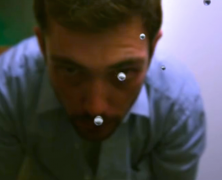
“The best short films are student shorts,” says Jacques Paisner, executive director and co-founder of the Santa Fe Independent Film Festival. In its fourth year, the festival’s four-day event, Oct. 16-20, will be held at the Center for Contemporary Arts (CCA), Lensic Performing Arts Center, The Screen, and the newly opened Jean Cocteau Cinema in downtown Santa Fe. Dedicated to screening independent films, Paisner shares that a good amount of the festival’s 2013 submissions, as of March 1, came from the student population. Filmmakers, like those from SFUAD’s Film School are provided resources, “great equipment,”as Paisner puts it, which allows for the ideal collaboration experience. “If you’re in directing class…you’ll work with a writer from the writing class and that creates a really good short film,” he says. Furthermore, the shorts can act as a “calling card” because, according to Paisner, the festival circuit is one of the only places students gain exposure. It is here they can say,”‘look I’m a student filmmaker, collaborate with me.” For two of SFUAD’s own film students, the Santa Fe Independent Film Festival was a tremendous opportunity to expose their work. “We were planning on entering the festival before we shot the film,” says SFUAD film major Seth Fuller, whose film U46-Anomaly (Anomaly in the SFIFF listings) will be screened for the SFIFF at 9 p.m., Oct. 16 at the CCA. “We went into it trying to make it as polished as possible, to be a product to showcase what we are capable of. With that being said, we wanted to focus on the local community first since we are local filmmakers.” Fuller’s 13-minute short, shot last year in collaboration with New Mexico local Scott Hussion (producer) and fellow student Emmett Meade (producer/editor), is categorized as a sci-fi drama and...
Helping Hand
posted by Maria Costasnovo
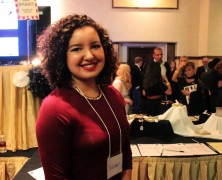
Big Brothers Big Sisters of Northern New Mexico recently held its annual gala, a fundraising event for the organization, this year held at Buffalo Thunder Hotel, drawing volunteers from all over northern New Mexico—including Santa Fe University of Art and Design. “Preparing an event like this is always hard, but fun at the same time. It is really important for Big Brothers Big Sisters since it’s one of the sources from we get most of the funds of the year for the kids,” says Chris Leslie, one of the organizers of the event. A lot of different business and people from all over northern New Mexico donated items ranging from furniture and jewelry to hotel rooms and trips. SFUAD student Dani Vondrak, a regular volunteer for BBBS, helped gather volunteers for the event. “On the event day we showed up and ask some of the people who were in charge what we could do to help out, and a lot of them were telling us that we should be behind the booths of the art pieces or vacations that are bet on, to kind of exemplify what they were about and explain why they should bet on that,” says SFUAD student Victoria Ann Dailey. This event also was an opportunity for some of the students to put their skills to use. Charles Austin Ross, a film student, helped in the gala with his camera: “I got this project by a stroke of luck. I was talking to Ron Nunnely over at the [Driscoll Fitness Center] and a friend and member of the gym came in to talk to him. Chris Alexander of Big Brothers Big Sisters was that friend, a really nice guy. He asked my major and I told him Film and so he extended an offer my way.” After the auction,...
Alumni Profile
posted by Arianna Sullivan
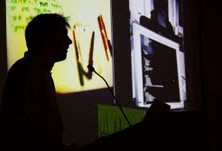
“As far as the Internet is concerned,” says Cordillera Productions Executive Director Jason Jaacks, “we are dealing with a Model T. There’s no V-8 here, And two weeks ago, we were like the Flinstones.” The Internet is still young in its development, but changing quickly. As it continues to grow and evolve as the leading tool for information sharing, documentarians like Jaacks are looking for ways to adapt storytelling to the Internet. Jaacks shared these thoughts in a lecture, “Documentary Without Borders: The Future of Storytelling in the Internet Age” on campus Oct. 3. According to Alenty, an Internet rating company, the average viewing time for a single web page is 33 seconds. Jaacks, a second-year student at the Berkeley School of Journalism and a 2009 graduate of the College of Santa Fe’s documentary studies program, is exploring storytelling techniques to engage viewers with attention spans shaped by the web. In order to create narratives that can hold an Internet user’s attention, Jaacks is experimenting with telling visual stories that have multiple narrative arcs and points of entry and that are interactive for the viewer—essentially interactive online movies. Jaacks cites Hollow as an example and source of inspiration for multimedia visual documentaries. The ‘movie’ explores the stories of more than 30 residents of McDowell County, W. Va. Online, Hollow consists of several visual timelines, made up of still and moving images, which can be scrolled through at the viewer’s leisure. Along the way are links to the detailed narratives of the stories featured on the timeline. The first time that Jaacks visited Hollow’s website, he spent two hours on it, putting the 33 second average viewing time to shame. Jaacks began telling stories through several mediums with his senior thesis as a student at CSF. His...
 Jackalope Magazine is the student magazine of Santa Fe University of Art and Design. Building on the interdisciplinary nature of our education, we aim to showcase the talent of our university and character of our city.